Nepal — The Annapurna Highlands
Nepal · 3,500m

Nepal — The Annapurna Highlands

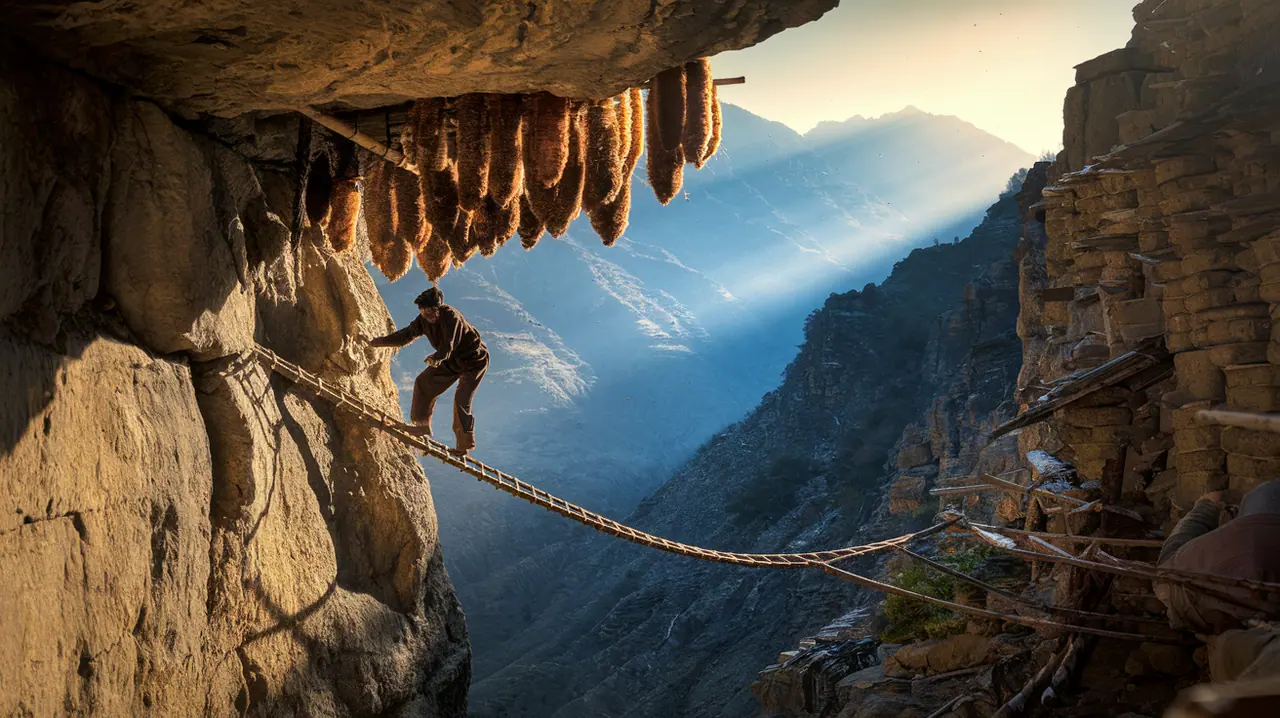
Twice a year — spring and autumn — Gurung and Kulung honey hunters descend from bamboo ladders onto sheer Himalayan cliffs to harvest from the massive hives of Apis laboriosa, the world's largest honey bee.

Potency

Highest in the world — 2–4x Turkish deli bal per gram. 80%+ Rhododendron pollen in top-shelf spring batches.

Taste

Dark amber to reddish, viscous, floral initial notes transitioning to a distinctive bitter-medicinal finish.

Harvest

Spring (April-May) and Autumn (September-October)

Why Nepalese mad honey is considered the gold standard

Nepal produces the world's most potent and most ritually-harvested mad honey. When wellness buyers and researchers talk about "authentic mad honey," they almost always mean honey from the central Nepalese hill districts — Kaski, Lamjung, Gorkha, Myagdi — where the Gurung and Kulung ethnic groups have been harvesting cliff-grown Rhododendron arboreum nectar for at least ten generations.

Three factors converge to make Nepalese honey distinct: the bee, the plant, and the people.

The bee: Apis laboriosa

Apis laboriosa — the Himalayan giant honey bee — is the largest honey-producing bee species on earth, with workers reaching 3 cm in length. It is the only species that builds its open-air comb on vertical cliff walls at altitudes of 2,500 to 4,100 meters. A single cliff wall in central Nepal can host 20 to 40 hives, each containing 30 to 60 kilograms of honey. This cliff-nesting behavior is what enables the traditional ladder-based harvesting method; it is also what makes Nepalese mad honey geographically irreplaceable. You cannot relocate Apis laboriosa to lower elevations and expect it to produce cliff honey.

The bees forage over a radius of 8 to 12 kilometers. In spring and autumn — the two mad-honey harvest windows — Rhododendron arboreum is one of the dominant flowering plants in that radius, and single-origin nectar accordingly dominates the combs.

The plant: Rhododendron arboreum

Rhododendron arboreum is the national flower of Nepal. It is a large evergreen tree or shrub reaching 12 meters in height, with vivid crimson-to-deep-red flower clusters (called the "Lali Gurans" in Nepali) that bloom at different elevations across the spring. At 2,000 meters the bloom is in March; at 3,500 meters it pushes to late April or early May. The flower's nectar carries several active plant compound isoforms — primarily active plant compound I, with variable quantities of II and III depending on microclimate.

The active plant compound concentration in the final honey varies with the percentage of Rhododendron pollen in the overall harvest. Brands with quality cooperatives report pollen analyses showing 80%+ Rhododendron content in their spring harvest batches — which translates into the highest potency range available commercially.

The harvesters: Gurung cliff-honey tradition

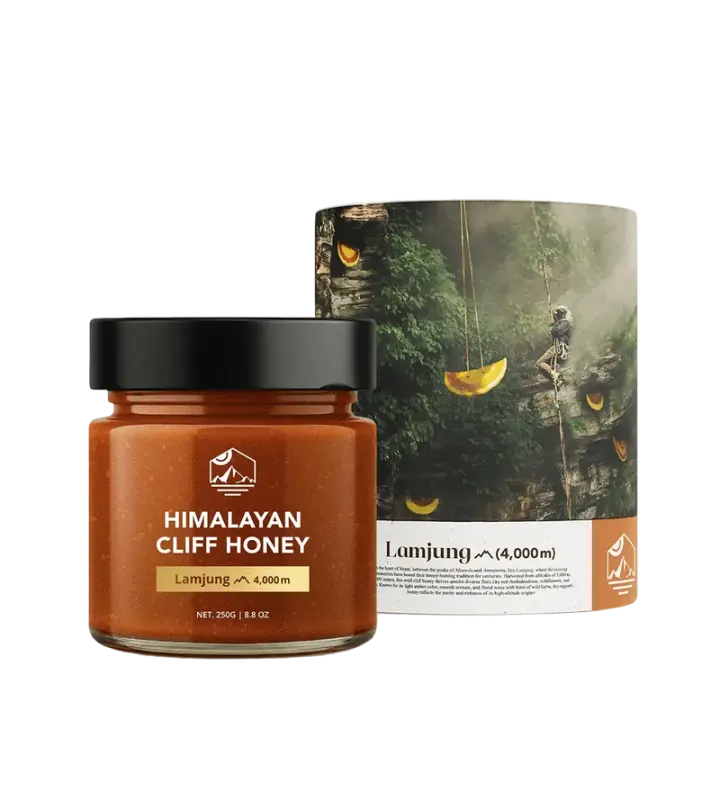
The Gurung honey-hunt is one of the most remarkable ritualized economic activities on earth. A single hunter, called a māsta, descends a hand-woven bamboo ladder anchored above a cliff face that can be 60 to 90 meters tall. Two team members stabilize the ladder from above; others below manage the comb-collection baskets and the smoldering vegetation bundles used to pacify the bees. The hunter cuts combs with a sharpened bamboo pole, catching them in a woven basket suspended beside him.

The harvest is conducted twice annually — once in spring (April-May) and once in autumn (September-October). A single harvest season can yield 300 to 600 kg of honey from a single cliff. The tradition is inextricable from Gurung identity: songs, rituals, and community roles are organized around the harvest calendar, and the rights to specific cliffs are traditionally clan-held.

Modern commercial pressure has threatened the tradition. Climate change has reduced Rhododendron bloom reliability; unauthorized outside harvesters have begun to raid cliffs; and younger Gurung workers are migrating to the Gulf states for labor, shrinking the pool of trained hunters. Brands that source ethically — Medicinal Mad Honey, Sherpa Honey, Real Mad Honey, Maddest Mad Honey — now pay significant premiums to Gurung cooperatives to sustain the practice.

Potency profile vs. Turkish deli bal

Nepalese mad honey is typically 2–4 times more potent than Turkish deli bal on a per-gram basis, because of two biological factors. First, the dominant Rhododendron species in Nepal (R. arboreum, R. campanulatum) produce higher-concentration active plant compound nectar than the Turkish dominants (R. ponticum, R. luteum). Second, the altitude-induced concentration effect: cold-climate bees consume less nectar water in comb-curing, leaving a denser final product.

Clinically this means a Nepalese dose needs to be proportionally smaller. A user comfortable with 5 grams of Turkish deli bal should start at 1 to 2 grams of Nepalese. Our dose-response explainer covers the math in detail.

Taste profile

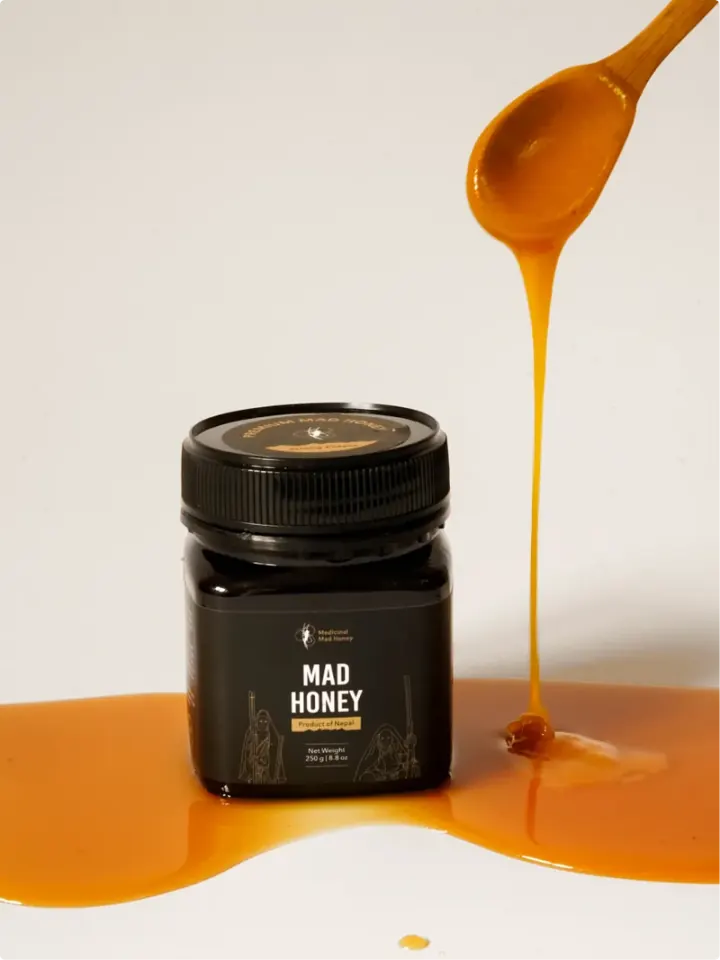
Authentic Nepalese mad honey has a dark amber, almost reddish hue — sometimes approaching burgundy against a white background. The flavor is complex: initially floral with strong Rhododendron perfume, then transitioning to a dark-amber bitter finish that some describe as "medicinal." The texture is more viscous than standard commercial honey and tends to crystallize slowly due to its high fructose-to-glucose ratio.

Counterfeit or diluted products typically show a lighter golden color, a simpler sweetness, and no bitter finish. Our authentication guide details the sensory differences.

Harvest ethics and fair-trade sourcing

The Gurung cooperative model has become the gold-standard sourcing arrangement. Ethical brands commit to:

  • Paying 2–4x the local wholesale price to hunter cooperatives.
  • Leaving at least 30% of each cliff's honey in place for bee-colony sustenance.
  • Harvesting only in traditional windows (skipping seasons when colonies are stressed).
  • Funding safety equipment for hunters (modern climbing harnesses, first-aid training).
  • Providing traceability documentation (Medicinal Mad Honey's QR-code system is the current best practice).

Buyers who care about sourcing ethics should look for brands publishing explicit harvester compensation data or displaying cooperative partnership certificates.

Pollen authentication

Nepalese mad honey is verified through a technique called melissopalynology — pollen microscopy. An accredited lab counts the pollen grains in a honey sample under polarized light and identifies them by morphology. Authentic Nepalese mad honey shows dominant Rhododendron arboreum pollen, supplemented by smaller quantities of other high-altitude flora — wild strawberry, primula, buckwheat. Brands like Maddest Mad Honey and Medicinal Mad Honey publish full pollen analyses per batch. Counterfeit products often reveal commercial-agriculture pollens (canola, clover, sunflower) that are inconsistent with Nepalese altitude.

Climate and supply trends

Two climate trends are reshaping Nepalese production. Warming temperatures are pushing Rhododendron bloom windows earlier and higher; hunters must climb to 3,800+ meters where the traditional ladder infrastructure is less developed. Unpredictable monsoon timing is also reducing bee colony health — the autumn harvest has been consistently smaller than historical averages for the past five years.

Global demand, meanwhile, has grown from a niche curiosity to a commercial category. The result: supply is constrained relative to demand, prices have risen, and counterfeiting has proliferated. Expect authentic Nepalese mad honey to cost $60–$180 per 100 grams at retail. Products priced significantly below this range are either low-potency (late-season batches, mixed origins) or not genuine.

Brands sourcing from Nepal

Seven of the eight brands we index source at least partially from Nepal. The strongest Nepal-focused brands are Medicinal Mad Honey (dual-HQ with QR traceability), Real Mad Honey (category-defining, Gurung cooperatives), Sherpa Honey (Annapurna focus, strongest lab transparency), and Maddest Mad Honey (highest potency claims with independent lab validation).

For first-time users

If your first exposure is to Nepalese mad honey, start with one gram (approximately a quarter teaspoon) and wait at least two hours before considering any increase. The potency is significant; the effect is real; the margin for error is smaller than for Turkish varieties. Read our first-time user clinical checklist before dosing.

Nepal — Frequently Asked Questions

What makes Nepalese mad honey different from Turkish? +
Nepalese mad honey is typically 2–4x more potent than Turkish deli bal because of different Rhododendron species (primarily R. arboreum in Nepal vs. R. ponticum in Turkey) and because high-altitude Apis laboriosa bees produce denser comb. The taste is darker and more bitter-finishing.
Who are the Gurung honey hunters? +
The Gurung are an ethnic group in central Nepal whose members have harvested Himalayan cliff honey for at least ten generations. A single hunter descends a bamboo ladder on a 60–90 meter cliff to cut combs from Apis laboriosa hives. The tradition is clan-organized and ritually coded.
When is Nepalese mad honey harvested? +
Twice annually — spring (April-May) and autumn (September-October). The spring harvest is typically more potent because it captures the peak Rhododendron bloom.
How can I tell if Nepalese mad honey is authentic? +
Look for dark amber to reddish color, a bitter finish in the taste, published pollen analysis showing >60% Rhododendron pollen, and a price above $60 per 100g. Our authentication guide details the full process.
Is Nepalese mad honey legal to import? +
Yes, to most Western countries (see our legality index). Personal-quantity imports to the US, EU, and Canada clear customs routinely. Australia and New Zealand block all imports.
What is the typical potency of Nepalese mad honey? +
Expect 1–3 grams to produce noticeable effects in sensitive users, 3–5 grams for typical moderate effects, and 10+ grams for strong experiences. Individual variability is high — always start small.
Verified Sellers

Brands sourcing from Nepal

5 indexed brands with authenticated origin.

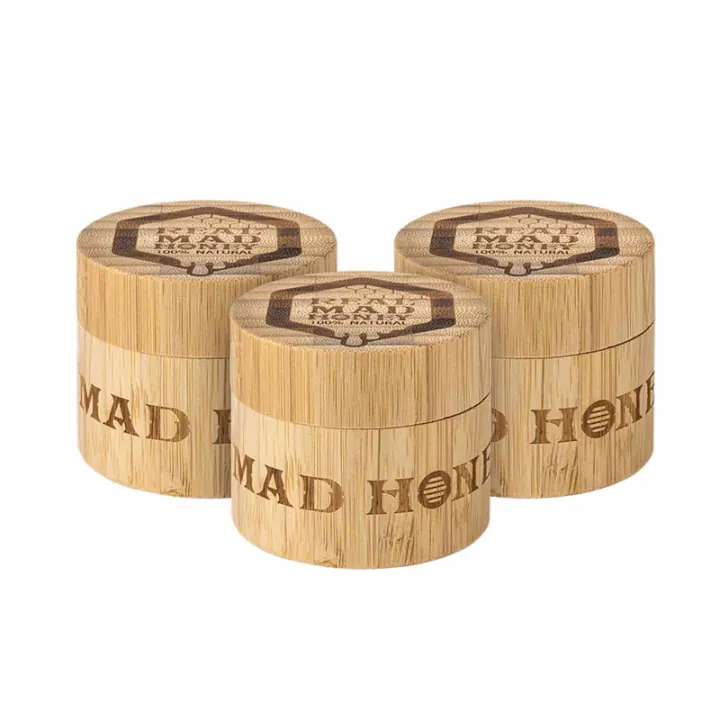
Real Mad Honey
NEPAL ORIGIN
TRUST SCORE: 9.8

Real Mad Honey

Gurung-sourced Nepalese cliff honey. Category-defining brand. Lab-verified potency.

Yeti Mad Honey
NEPAL ORIGIN
TRUST SCORE: 8.1

Yeti Mad Honey

Consumer-friendly 5g sticks from MHS. Widest wholesale network in the US.

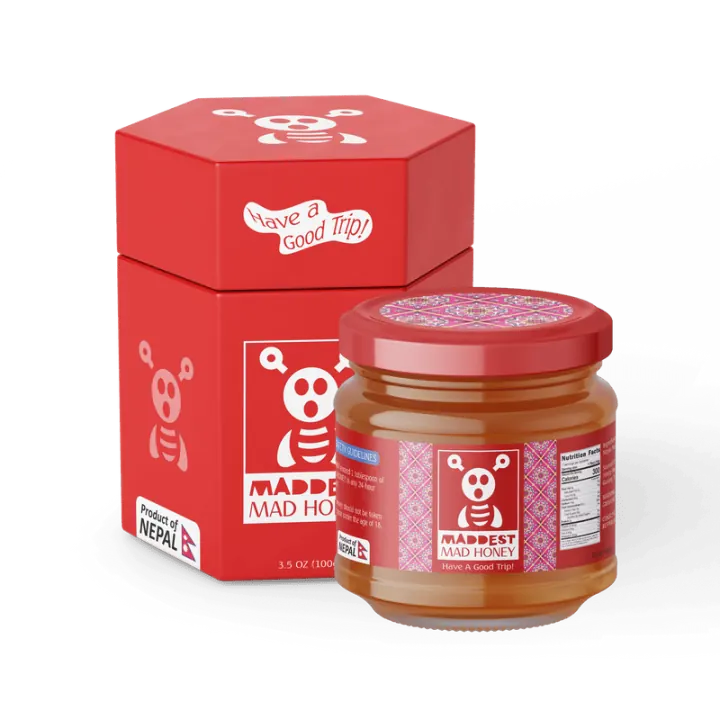
Maddest Mad Honey
NEPAL ORIGIN
TRUST SCORE: 7.5

Maddest Mad Honey

Lamjung Nepalese origin, 87%+ rhododendron pollen. Max-potency positioning.

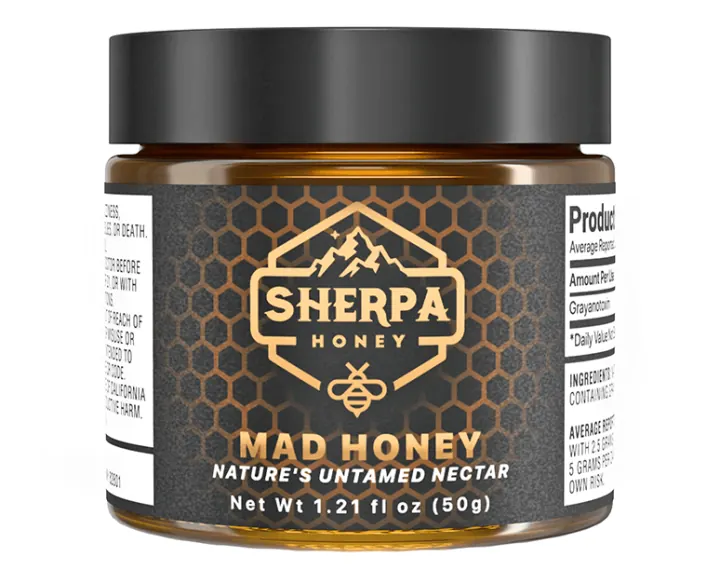
Sherpa Honey
NEPAL ORIGIN
TRUST SCORE: 8.0

Sherpa Honey

Annapurna region. COA in every box. Strictest lab transparency in category.

Medicinal Mad Honey
NEPAL ORIGIN
TRUST SCORE: 8.9

Medicinal Mad Honey

Cliff-to-Customer QR traceability. 2,700+ honey hunters. Dual US/Nepal HQ. Broadest product line.